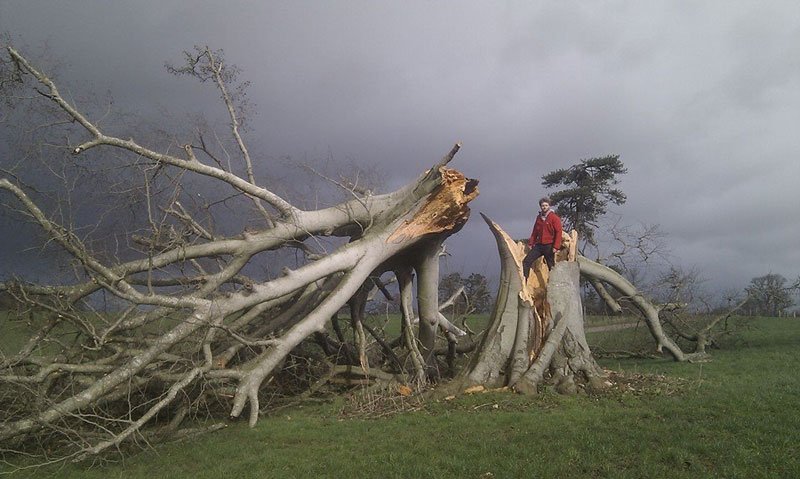
A guest article by our managing director and senior safety consultant, Graham Joyce.
Compared to many other risks that most people accept in their daily lives the risk posed by trees is actually very low. Around six people in the UK are killed every year from falling trees or branches. In comparison, between 4 and 5 people are killed every day on the UK’s roads, whilst slips, trips and falls account for more than 9,000 deaths every year!
In terms of safety, this means that tree management therefore needs to satisfy the tree owners Duty of Care responsibilities whilst also being proportionate and reasonable to the actual threat posed. What is deemed as reasonable will depend on the individual circumstances; there is no one size fits all solution. For instance, the requirements expected of Network Rail are likely to be far greater than those expected of the average householder. The expectations on the manager of, say, a large rural estate would fall somewhere between the two.
When considering tree management and tree safety, the first and probably most important question is “what could be harmed by the tree?”. A tree in the middle of a private woodland clearly poses a much lower risk than exactly the same tree hanging over the M5. Anything that could be damaged is referred to as a “target”. No target = no risk. For example, in the images below the first tree clearly shows some signs of disfunction but poses a low level of threat as it is on a private estate, well away from any footpaths and not within falling distance of any targets. It is a mature tree with high ecological value, and so the advice in this instance was to preserve the tree through suitable maintenance rather than to remove it. In comparison, the second image shows the high number of targets surrounding a tree which was found to have decay at its base. The risk posed by this tree was therefore notably higher and removal was considered to be the safest course of action.
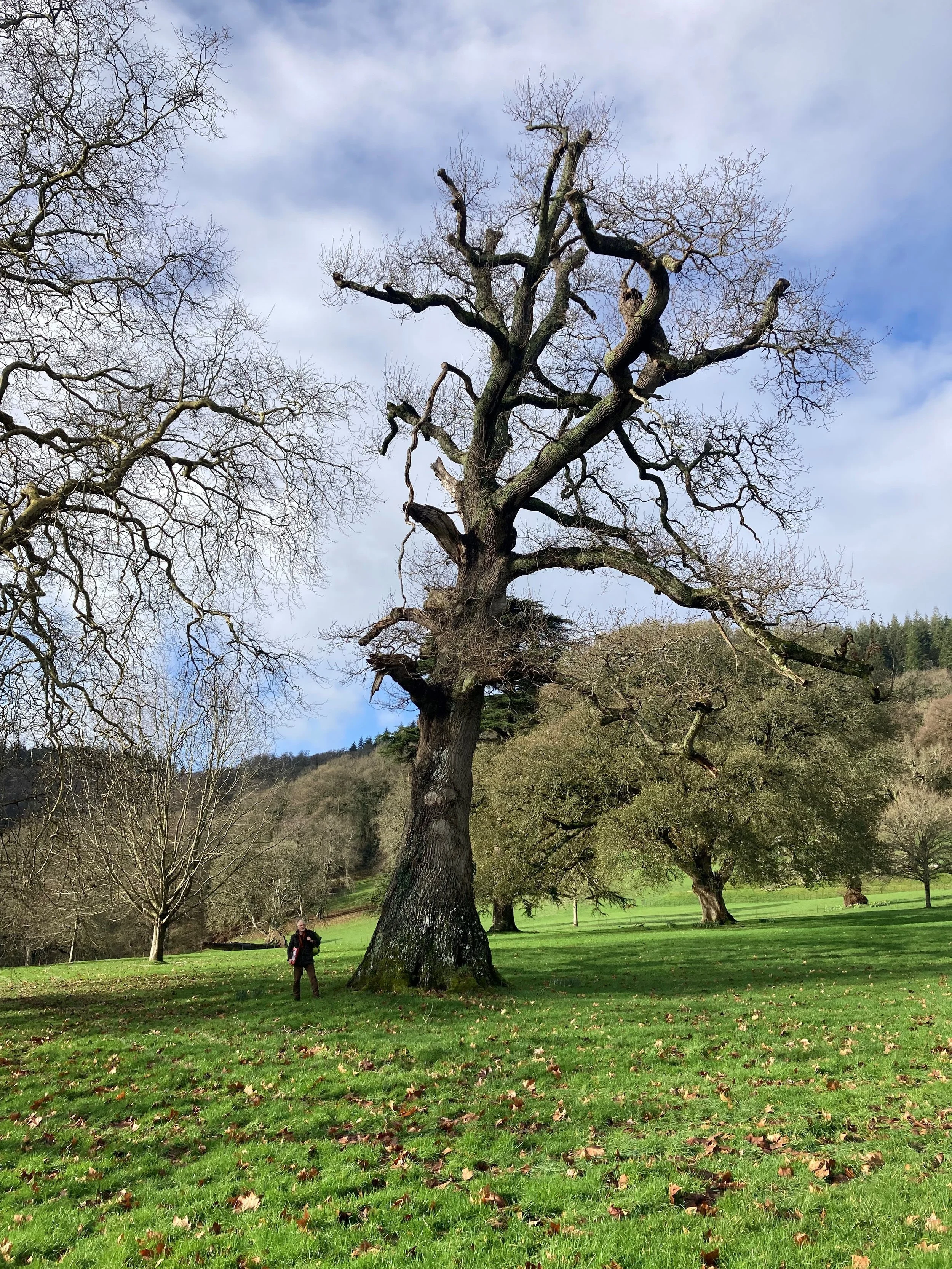
Although dysfunctional this tree is considered to present a low level of risk
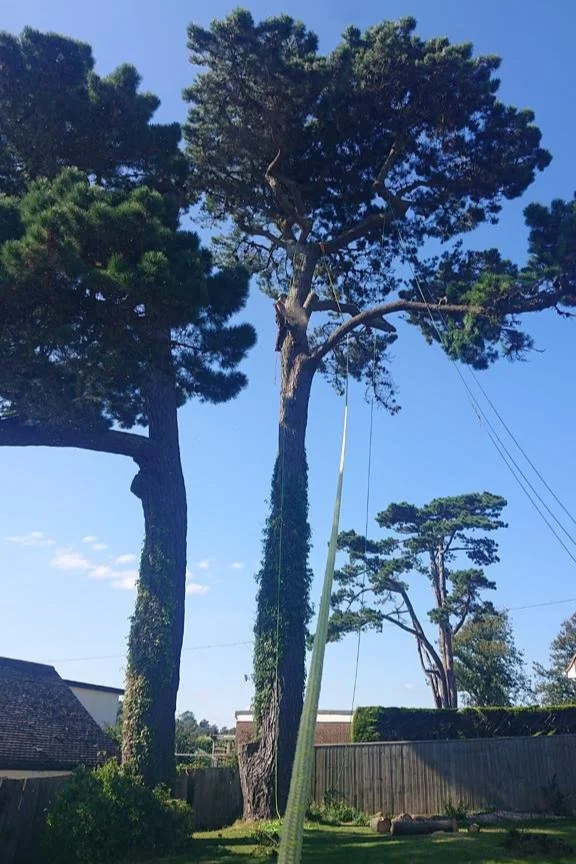
With a higher number of targets across multiple properties, this tree presented a more serious risk
Tree management should be balanced and as well as considering risk should also take into account the landscape, ecological value and all the other benefits that trees contribute to society. It should also be remembered that trees are dynamic, living organisms and as such naturally have an element of the unpredictable about them! The only truly “safe” tree would be the felled tree but such an approach would impoverish us all whilst only removing a risk that is, for the vast majority, extremely minimal.
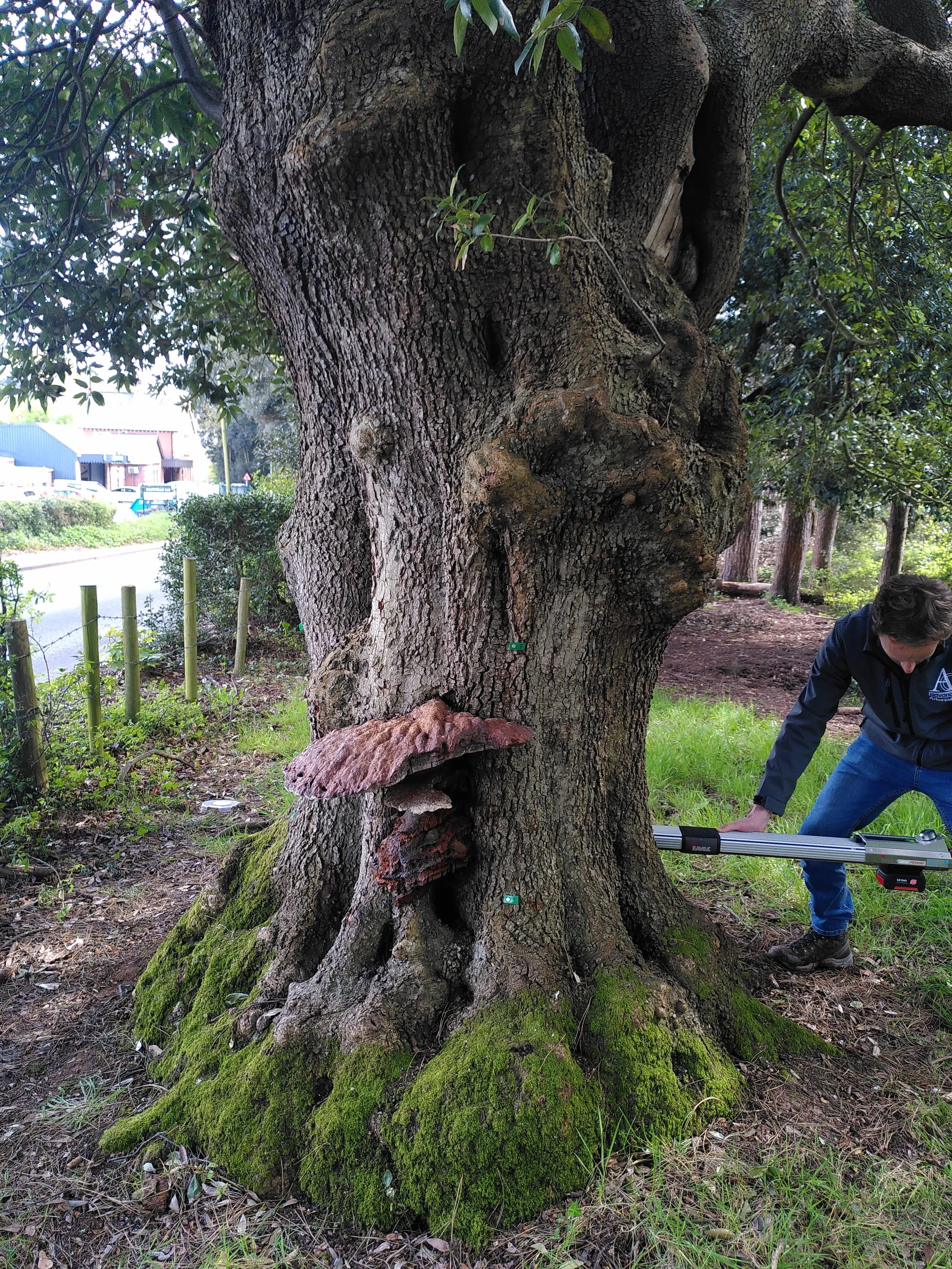
Advanced Arboriculture using a resistograph
Whether you own one tree or ten thousand trees it is essential to consider how you manage the risk presented to third parties. Large trees close to properties, busy roads or other high value targets are likely to be best dealt with through organising regular inspections by a suitably qualified and experienced professional. Frequency of inspection will depend on individual circumstances but keeping track of your trees throughout the years will make it much easier to spot changes and compare tree health and physiology in the long term. Professional safety inspectors will also have access to state-of-the-art specialist equipment like resistographs which allow them to build a more complex and complete picture of a tree.
Tree owners are often the most likely to be alert to changes in trees that may indicate some underlying safety issue. Unexpected leaf loss or crown dieback, the appearance of toadstools (particularly at the base of a tree), storm damage or movement of the root plate are all indications of potential dysfunction that may require action.
As well as providing safety assessments, consulting arboriculturalists can also give you advice on how best to look after your trees to give them the longest, healthiest life possible, as well as advising on trees and the law and helping you to source a tree surgeon if needed. One of Dartmoor Tree Surgeons’ biggest strengths is our close working relationship with our sister company, Advanced Arboriculture, which allows us to provide a full suite of arboricultural consultancy and quality tree surgery all under one roof.
If there is any way in which we can help you with your tree management, or if you would just like some informal advice and a chat, please don’t hesitate to get in touch as we will be delighted to help.